Backup Runtime Estimates
| Load | Typical continuous draw | Approx. runtime from 12.3 kWh usable |
| Refrigerator, modern | 100–150 W | 3–5 days |
| LED lighting, 10 bulbs | 100 W | about 5 days |
| Router, modem and laptop | 60 W | about 8 days |
| 55-inch television | 120 W | about 4 days |
| Sump pump | 800 W while running | about 15 running hours |
| Microwave oven | 1,000 W | about 12 hours |
| Electric kettle | 1,500 W | about 8 hours |
| Space heater | 2,000 W | about 6 hours |
| Window air conditioner | 1,200 W | about 10 hours |
| Well pump, 1 hp | 750 W | about 16 hours |
| Planning basis | 80% depth of discharge | about 12.3 kWh usable |
| Conditions | 25 °C, steady load | inverter losses not counted |
Product Overview
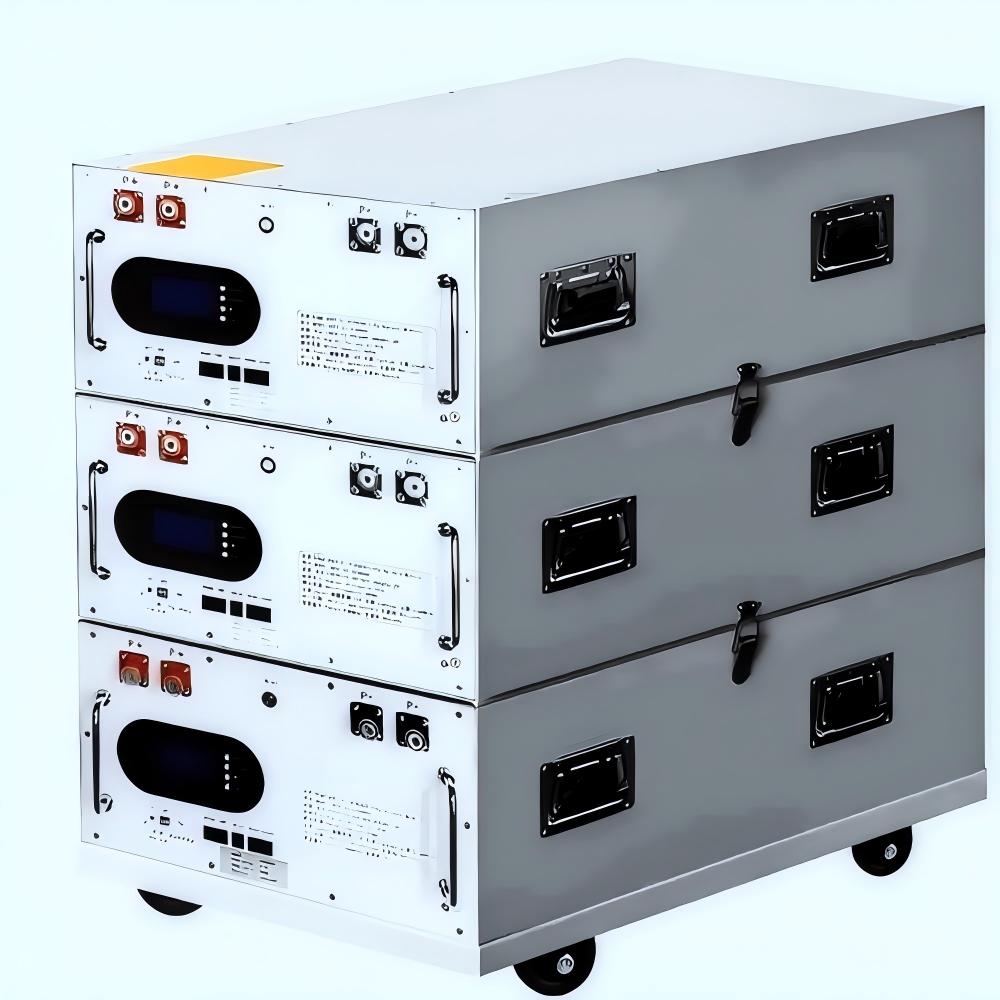
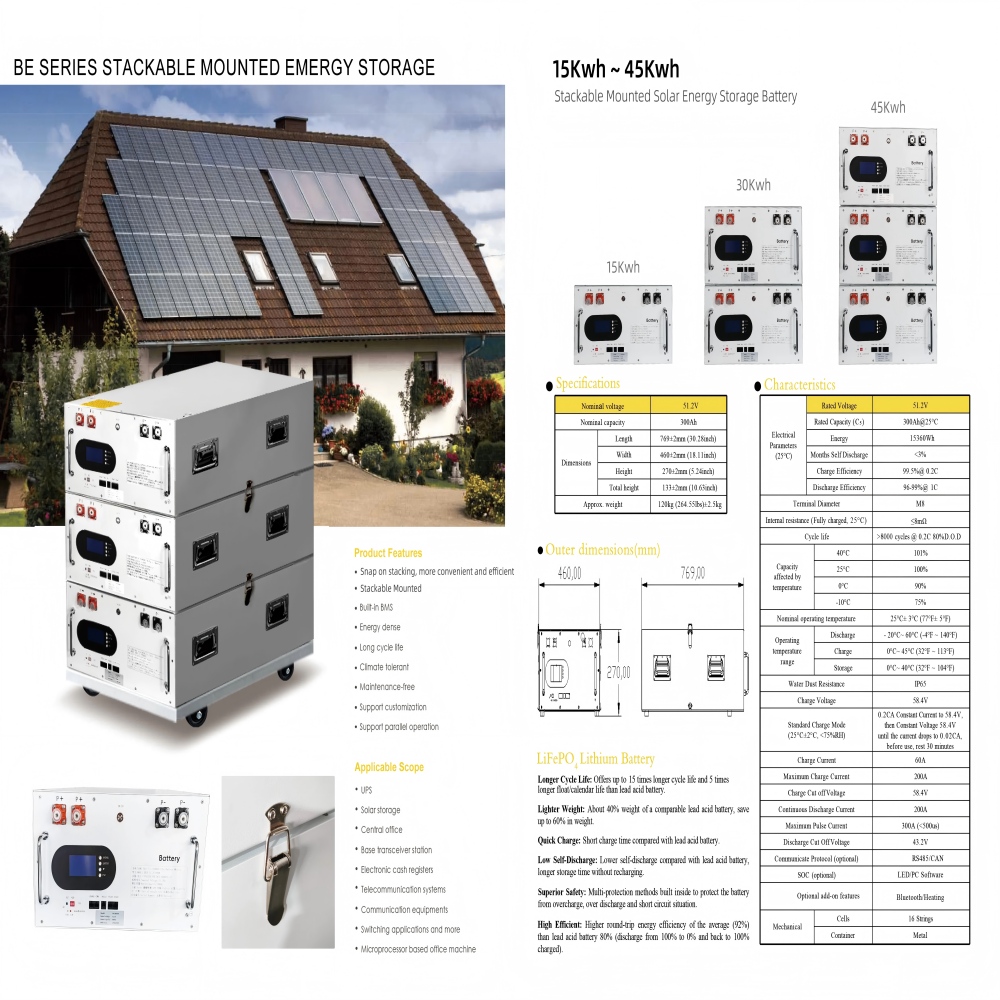
A 15.36 kWh lithium iron phosphate battery delivered as one wheeled cabinet: 51.2 V nominal, 300 Ah, with battery management, front displays, a DC breaker and terminal posts already fitted. Instead of assembling a wall of cells and wiring them on site, you roll a battery storage power station into the utility room, land the inverter cables on the terminals and connect a charge source. It is sized for a house that wants the fridge, lights, router and pump to ride out an outage, and for a cabin or workshop that runs with no grid at all.
The pack is a deep cycle lithium battery in the working sense of the term: it is built to be emptied and refilled daily rather than kept as an emergency reserve. It is rated for daily cycling with a design life of around ten years, which is the rhythm of a solar household — discharging through the evening, recharging the next morning from the array.
Because the cabinet stands on castors, it is not fixed to one address. At a cabin or a remote job it can top up from an on-site array and act as a solar power bank charger after dark; at home it simply sits in the garage until the grid drops.
Stacked Build and Controls
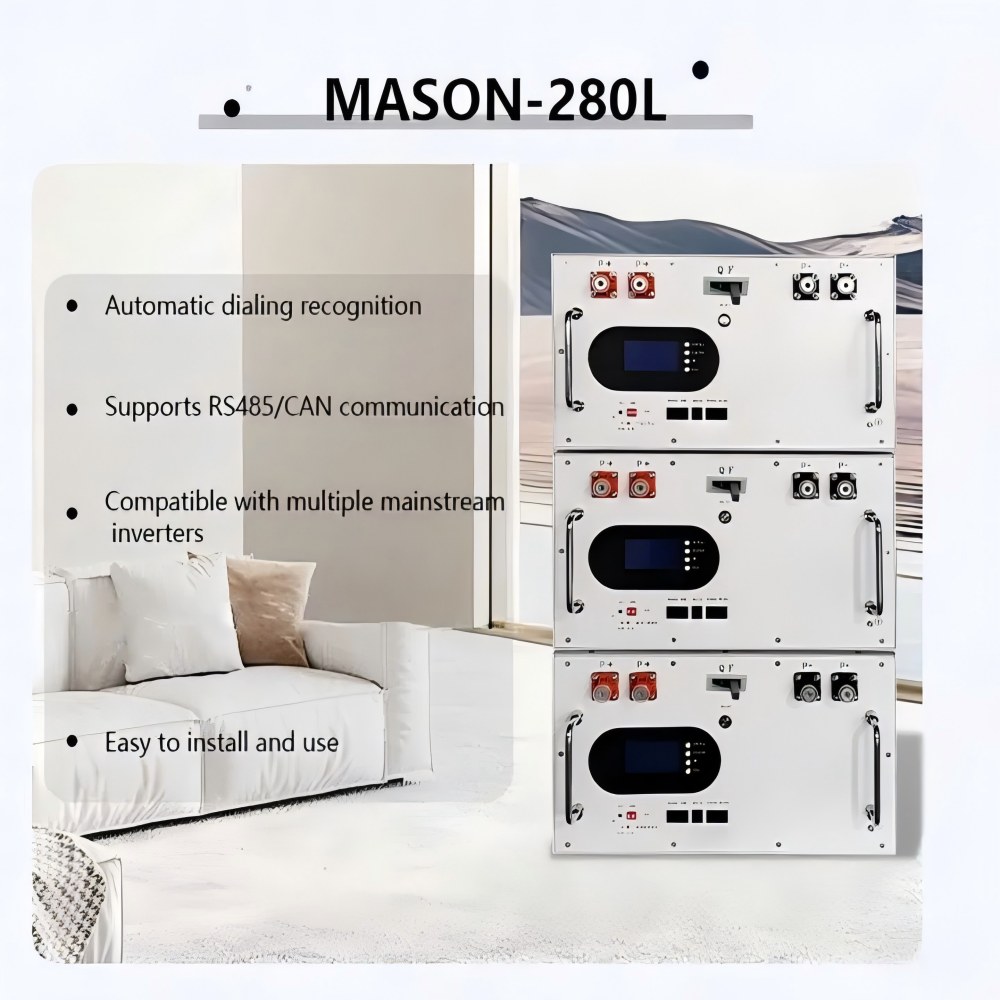
- Three modules in one column: the full 15.36 kWh is split across three battery modules stacked and latched together, so a lithium LiFePO4 battery of this capacity holds one floor position instead of three separate racks.
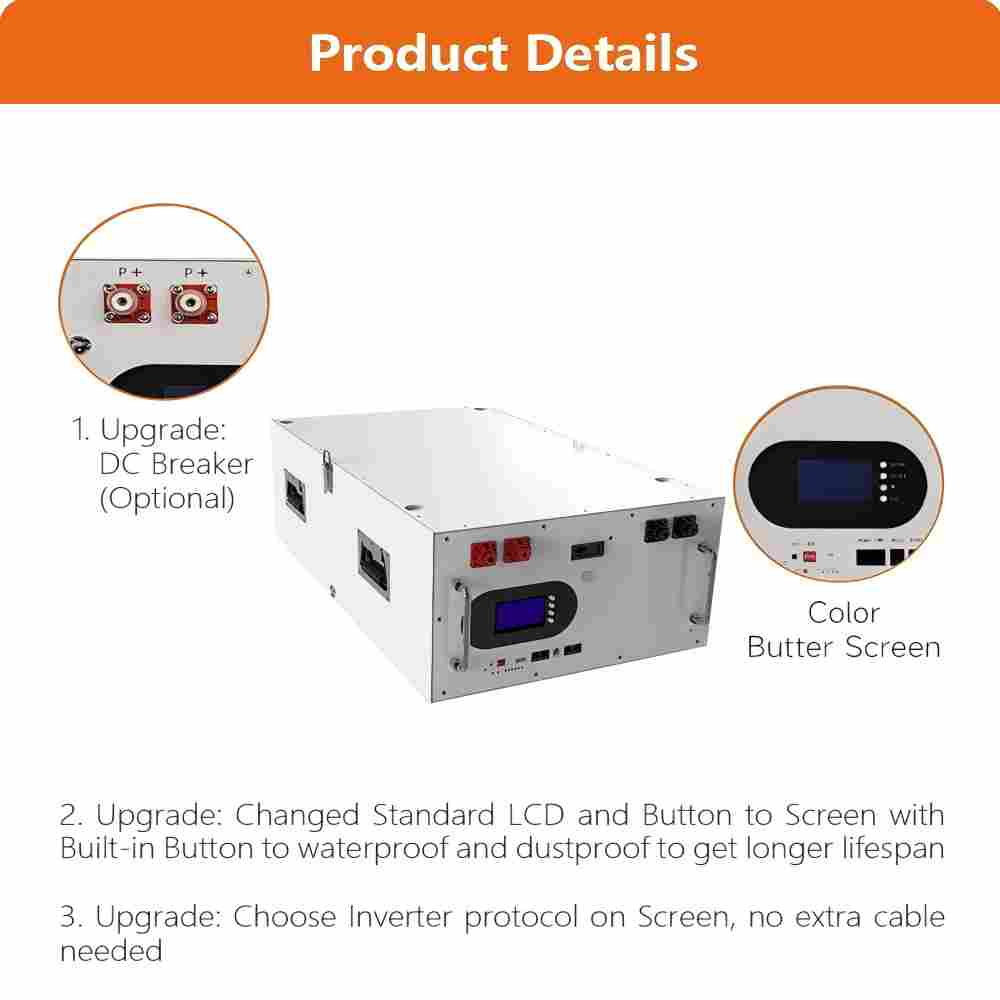
- A display on every module: each screen shows charge level, voltage and fault codes at standing height, with no panel to remove and no laptop to connect.
- Button-driven menus: a row of buttons beneath each display keeps the menu usable in a cold garage or with work gloves on.
- Handles and castors: vertical handles on both sides and wheels on the base let two people walk the unit into position and adjust it before the DC cables are cut to final length.
- Footprint-sized storage: stacking keeps deep cycle battery storage closer to the footprint of a large appliance than to a bank of lead-acid blocks, which matters in a utility room that also holds an inverter, a water tank and a fuse board.
- Room to work: terminal posts, the DC breaker and the BMS board are all reached from the front face, so a lithium deep cycle battery of this size can be commissioned and serviced without hauling the cabinet out of its corner.
Battery Management and Safety
Protection is handled inside the cabinet. A battery management system watches cell voltage, current and temperature continuously and cuts overcharge, over-discharge and over-current at the pack rather than leaving it to the inverter, with thermal management keeping the cells inside their working window. On the chemistry itself: a LiFePO4 lithium battery uses an iron-phosphate cathode, which is the reason this family became the default for indoor equipment. It avoids cobalt and nickel, and its behaviour under abuse is far less energetic than the older lithium chemistries. Balancing runs while the pack charges, pulling the strongest cells back into line so capacity does not drift downward over the years. That quiet work separates deep cycle batteries that still deliver most of their rating in year eight from ones that fade early. Standby draw stays below 1 W, which matters for a unit that may sit for weeks between outages — it will not quietly drain itself flat while waiting. The operating range runs from -20 °C to 65 °C, so an unheated garage is inside the window; if the cabinet sits below freezing, confirm the charging limits with us before a charger is connected.
Maintenance & Care
No water, no equalising A flooded bank asks for distilled water every few months, and once the plates have been exposed the capacity lost never comes back. This cabinet is sealed: there is nothing to top up, no hydrometer to float and no specific-gravity reading to log. Lead-acid also needs a periodic equalise charge — a deliberate overcharge that stirs the electrolyte and gives off hydrogen, which is why those banks live in a ventilated box. The active balancer inside this lithium LiFePO4 battery does that levelling in the background on every normal charge, with no extra cycle, no gassing and no vented cupboard.
What the year actually looks like Check that the terminal posts are tight and dry at commissioning and once a year after that; a thin film of terminal grease is enough protection, and there is no acid crust to scrub off. Wipe the housing with a damp cloth instead of hosing it down, and keep the vents and the floor around the castors clear. If the cabinet has stood idle for months, glance at the front displays or open the monitor to confirm state of charge and that no fault code has been logged.
Mistakes worth avoiding Do not leave an old lead-acid charger's equalise or desulphate mode running into this pack — it is written for a chemistry that can absorb an overcharge. Do not shelve the unit empty for a long season: leave it part-charged and top it up from time to time. If a fault code appears, note it down before clearing anything, because it identifies which of the three modules needs attention.
The labour a flooded deep cycle bank takes — watering rounds, terminal cleaning, equalise cycles and a full replacement every few years — largely disappears here. What is left is an annual inspection that takes minutes, which is the practical difference between a deep cycle lithium battery and the lead blocks it replaces in a battery storage power station.
Charging Options
- From the grid: an inverter-charger or a grid-tied inverter refills the pack overnight, the usual pattern for a household that buys power on a night tariff and draws on the battery through the evening peak.
- From a generator: for a site with no PV, or a week of heavy cloud, the generator charges through the same input, so a few hours of running time covers the next stretch of use.
- From solar: an MPPT controller or the inverter's PV input tops the pack up whenever the array is producing, and in its simplest form the setup is a solar power bank charger — PV in during daylight, stored energy out at night. Size the array to your daily kWh rather than to the battery nameplate; oversizing the PV only pays off on the dullest days.
- What the inverter sees: a LiFePO4 lithium battery holds a flat voltage curve across most of its range, so state of charge has to come from the BMS rather than guessed from voltage. Pair it with an inverter that reads the pack, or with a shunt-based monitor.
- Compared with lead-acid charging: deep cycle batteries built on lead chemistry taper hard as they approach full and want a long absorption stage, while this pack takes a steadier charge and needs no equalise cycle, so a normal charge window finishes the job.
- Sizing the array: send us the array voltage and the daily kWh you expect to use, and we will confirm whether the PV and controller you have will refill the pack on a normal day before you commit.
Applications
- Whole-home backup: put the essentials on a critical-loads panel — fridge, lighting, router, boiler controls, a few sockets — and let a battery storage power station in the garage carry them when the grid drops.
- Grid-tied solar self-consumption: store the midday surplus and spend it in the evening instead of exporting it for a low rate.
- Off-grid houses: with no connection at all, the array and the pack carry the whole load, the cabinet doing the job of a solar power bank charger scaled for a household rather than a camping kit, with a generator as the occasional backstop.
- Small commercial sites: shop tills, fridges, lighting and security running from a lithium deep cycle battery bank that grows in 15.36 kWh steps as the site does.
- Utility cupboards in flats: without a garage, the cabinet stands in a service cupboard and keeps the fridge, router and lighting alive through an outage.
- Phased replacement: where an ageing lead-acid bank is due for renewal, swap in one cabinet now and add capacity later instead of replacing the whole bank in one hit.
Specifications
| Property | Value |
|---|
| Battery chemistry | LiFePO4 (lithium iron phosphate) |
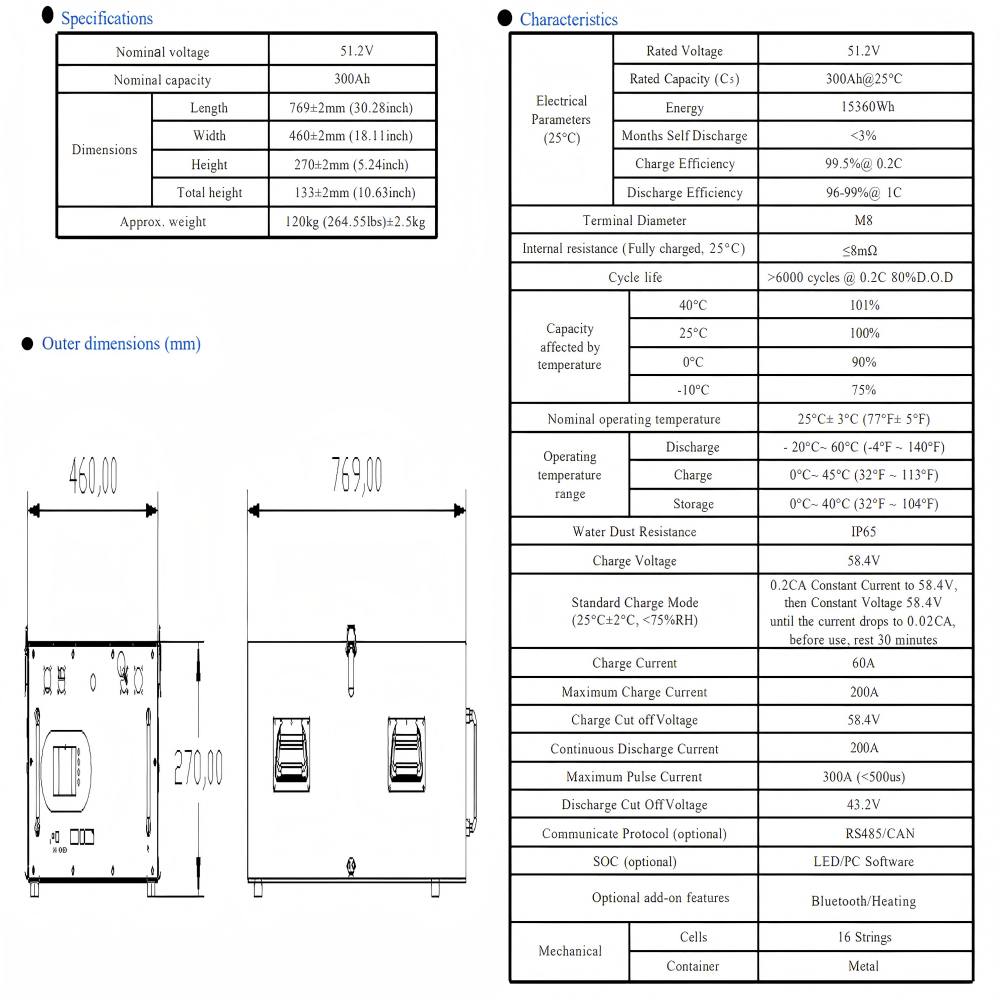
| Nominal voltage | 51.2 V |
| Nominal capacity | 300 Ah |
| Total energy | 15.36 kWh |
| Cycle life | up to 8,000 cycles at 0.2C, 25 °C, 80% DOD |
| Design life | around 10 years |
| Operating temperature | -20 °C to 65 °C |
| Parallel expansion | up to 16 units in parallel |
| Charging sources | utility grid, generator, solar |
| Monitoring | built-in BMS, active balancing |
| Compliance | UN38.3, IEC62619, RoHS |
Parallel Expansion
One unit is a starting point, not a ceiling. Up to 16 of these batteries can be tied in parallel, taking the bank to 4,800 Ah — around 240 kWh — which spans a single-house backup through to a small commercial load. Every lithium LiFePO4 battery in the stack keeps its own management system, so one unit tripping does not take the whole bank offline.
Growth is deliberately modular: buy the deep cycle battery storage you need this year, add a second cabinet when the loads grow, and keep the same inverter. Capacity arrives in 15.36 kWh steps rather than by rebuilding the bank, so cabling, fusing and floor space stay predictable.
Wiring practice matters more than people expect. Keep DC cable lengths equal between each lithium deep cycle battery and the busbar so they share current evenly, fuse every unit separately, and check the inverter's DC current limit before adding a third or fourth cabinet. Send us the inverter model and the details of any existing battery bank and we will check the combination before you order.
Ordering and Delivery
- Send the load list and the inverter model. Tell us which circuits you want to keep running and which inverter you plan to use, and we will confirm how many cabinets and what cabling the job needs.
- Confirm where it ships from. Units are held in local stock in the regions we serve; your sales contact will confirm which warehouse covers your address, and a China-warehouse order can be arranged where that suits better.
- Expect 3–7 days on stock. Stock units are prepared and dispatched within 3–7 days, with swift delivery from the local warehouse once they leave.
- Allow about 35 days for a custom build. Custom configurations are quoted at roughly 35 days, with the schedule confirmed in writing when the order is placed.
- Warranty is 5 years. Every cabinet carries a 5-year warranty — keep the dispatch documents so a claim can be traced without delay.
- Plan the last few metres. A unit of this size normally travels on a pallet; tell us about steps, narrow doorways, gravel or a lift before dispatch and we will advise on getting it to its final position.
- Ask for the documents you need. The spec sheet, manual and the test paperwork behind the compliance references above can be supplied by your sales contact for your installer or inspector.
About Our Company
Xinyubattery is the brand of Shenzhenshi Xinyu Newenergy Technology Co.,LTD, a Shenzhen-based company founded in 2016 and working in green power solutions for more than ten years. Through a vetted network of production partners, we bring a broad range of power products together in one place and consolidate each order for you. Products are checked before dispatch, packed for export and shipped from local stock, and our team stays available for technical advice, fitting questions and after-sales help.
FAQ
What else do I need to complete a home backup system?
A battery storage power station is one part of the system. You also need an inverter or inverter-charger with a 48 V-class DC input, a transfer switch or a critical-loads sub-panel so the house can run from the battery while the grid is down, DC cabling with fusing between battery and inverter, and a level, ventilated position for the cabinet. Send us the inverter model and the circuits you want to keep live and we will confirm the pieces before you order.
How does the active balancer help over the life of the battery?
Cells never age at exactly the same rate. The active balancer moves charge between them while the pack charges, so the weakest cell stops setting the ceiling for the whole pack. The practical result is a lithium LiFePO4 battery that keeps more of its rated capacity in later years, and a state-of-charge reading that stays honest instead of drifting.
How much room does the cabinet need?
Plan for a level floor that can carry a cabinet of this size, a ventilated position out of direct sun, and clear space at the front so the displays, breaker and terminals can be reached without moving the unit. Deep cycle battery storage at this capacity no longer needs a dedicated plant room, but it does need to stay dry and above flood level. Send us the room dimensions and a photo and we will tell you whether the position works.
What maintenance does it need?
Very little. There is no water to top up and no acid to vent, which is the everyday difference from the flooded deep cycle batteries this replaces. Keep the terminals tight and clean, leave the vents clear, and read the state of charge on the front displays if the unit has been idle for months. If a fault code appears, note it and contact us — the code points at the affected module.
How much of the 15.36 kWh can I actually use?
Plan on roughly 80% depth of discharge for daily cycling and keep the rest as headroom. That is the basis of the runtime estimates further up the product, and it is also the depth at which the cycle rating is quoted, so a deep cycle lithium battery used this way stays inside the conditions it was rated for. Regular deeper discharges are possible, but they shorten life.
Will it work with my existing 48 V inverter?
The 51.2 V nominal places this pack in the 48 V class used by most home inverters and hybrid units. What has to line up is the inverter's DC input window and the way it reads state of charge — send us the make and model and we will confirm the pairing. Where the inverter expects to talk to the pack, check that the communication protocol matches; a LiFePO4 lithium battery with its own BMS needs the inverter to respect the limits that BMS publishes.